

As the frost settles over the Lincolnshire Wolds and the North Sea winds pick up across the Fens, most homeowners retreat indoors. However, for your garden, winter isn’t just a season of rest—it is the most critical time for structural maintenance.
In the tree care industry, we often call the period between November and March “The Golden Window.” If you want your property to remain safe and your trees to flourish come spring, understanding the specifics of winter pruning and maintenance is essential.
1. Why Winter is the Best Time for Tree Surgery
Many people assume that tree work should wait until the weather warms up. In reality, performing tree surgery during the dormant season offers several distinct advantages:
-
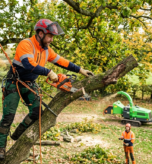
Zero Visibility Obstruction: Without a thick canopy of leaves, a professional tree surgeon can see the “skeleton” of the tree. This allows us to identify structural weaknesses, such as crossing branches or hidden decay, that are invisible in the summer.
-
Reduced Stress and Disease: Pruning creates a “wound” on the tree. During winter, common pathogens and insects are also dormant, significantly reducing the risk of your tree contracting infections like Silver Leaf or various fungal decays.
-
Minimal Ground Disturbance: In Lincolnshire, our clay-heavy soil can get quite soft. When the ground is frozen or at least firmer in winter, heavy equipment or even foot traffic causes less compaction around the root zone.
2. Essential Winter Pruning: What Should You Focus On?
Not every tree requires the same approach. However, every homeowner in Lincolnshire should perform a “perimeter check” for the Three Ds:
Deadwooding
Dead branches are a ticking time bomb. During winter gales, these are the first to snap, potentially damaging your roof, car, or power lines. Removing deadwood now ensures the tree’s energy isn’t wasted and your property stays safe.
Structural Thinning
If your tree has grown too dense, it acts like a sail in the wind. By strategically thinning the crown, we allow wind to pass through the tree rather than pushing against it, which prevents “windthrow” (the tree being uprooted).
Fruit Tree Maintenance
If you have an orchard or even a single Apple or Pear tree, February is your last chance. Proper winter pruning encourages the growth of “fruiting spurs,” ensuring you get a heavy crop of fruit in late summer rather than just a mess of leafy water-sprouts.
3. Navigating Lincolnshire’s Regulations: TPOs and Conservation Areas
Before you pick up a saw, it is vital to understand the legalities. Lincolnshire is rich in history, and many of our trees are protected.
-
Tree Preservation Orders (TPOs): Many trees in areas like Lincoln, Woodhall Spa, and Stamford are protected by the local council. It is a criminal offense to prune or fell these without written permission.
-
Conservation Areas: If you live in a designated Conservation Area (common in our historic market towns), you must give the local planning authority six weeks’ notice before carrying out work.
Pro Tip: At Lincolnshire Tree Care, we handle the council applications on behalf of our clients. We know exactly what the local authorities need to see to approve your maintenance.
4. The Storm Prep Checklist
Our county is known for its flat landscapes, which means the wind can gain incredible speed. To prepare your trees for the next “Beast from the East” or Atlantic storm, check for:
-
Tight “V” Crotches: Where two trunks grow closely together. These are prone to splitting.
-
Heaving Soil: If the soil at the base of the tree is lifting, the tree may be leaning and unstable.
-
Fungal Brackets: Mushrooms growing at the base of the trunk are a sign of internal rot.
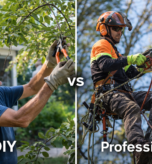
5. Why DIY Tree Work Isn’t Worth the Risk
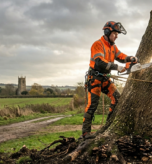
While it might be tempting to tackle a low-hanging branch yourself, tree surgery is one of the most dangerous professions in the UK.
-
The Ladder Trap: Most garden ladders are not designed for uneven garden soil.
-
Chain Saw Safety: Without “Chainsaw Protective Equipment” (PPE) and Aerial Rescue training, the risk of a life-altering injury is high.
-
Long-Term Tree Health: An incorrect cut can leave a “stub” that rots or a “flush cut” that never heals, effectively sentencing your tree to a slow death.
Conclusion: Prepare Today for a Greener Tomorrow
Winter tree care isn’t just about aesthetics; it’s about the safety of your home and the longevity of Lincolnshire’s beautiful natural landscape. By taking action now, you ensure that when spring finally arrives, your trees are ready to burst into life, healthy and structurally sound.